

Does Plywood Board Quality Affect Laminate Finish?
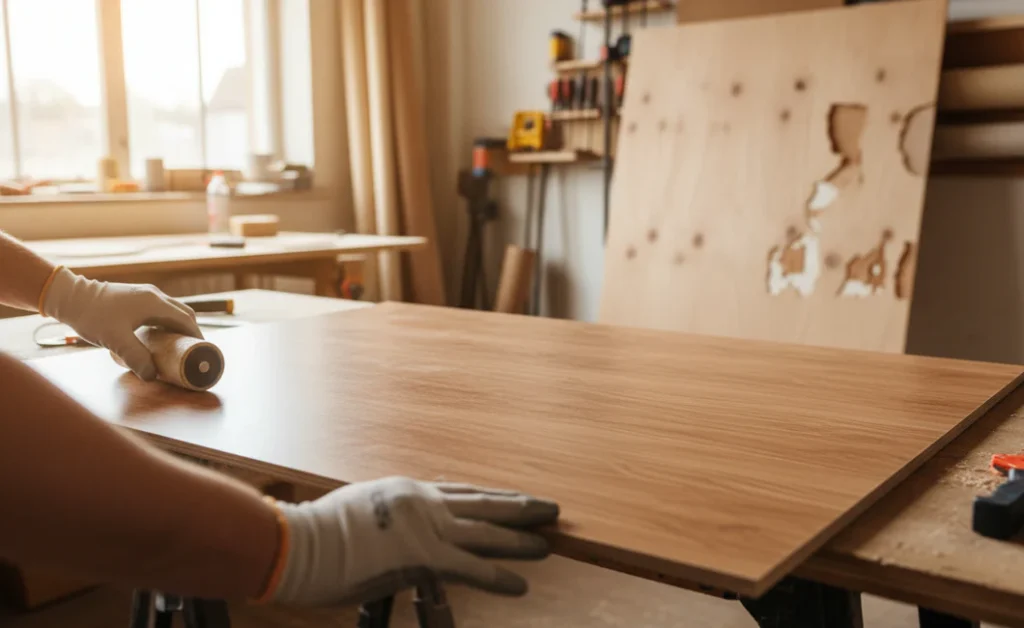
What Most Homeowners Realise Too Late?
When you invest in interiors—be it a modular kitchen, wardrobe, or office furniture—you expect the laminate finish to look fresh and flawless for years. But
many Indian homeowners face an unpleasant surprise within just 12–24 months: bubbling laminates, lifted edges, surface cracks, or dull patches that ruin the look of furniture.
At first glance, it feels like the laminate quality is to blame. However, in most real-world cases, the actual issue lies with the plywood board underneath.
In Indian conditions—especially in regions like Gujarat where heat, humidity, and monsoon moisture are intense—the quality of plywood boards directly affects how laminates perform. From bonding strength to finish stability, plywood acts as the foundation. If the base fails, the surface will too.
This blog explains why plywood quality matters, what’s trending in 2025, and how to choose the right plywood–laminate combination for long-lasting interiors.
Key 2026 trends shaping plywood & laminate choices:
Growing demand for waterproof plywood sheets due to rising moisture issues
Shift towards super-matte, fabric, stone, and synchronized textures
Higher awareness about substrate compatibility
Designers insisting on tested plywood + laminate combinations
Reduced tolerance for repair-heavy interiors
In Gujarat, where temperature swings and coastal humidity affect materials quickly, the trend is clear: quality plywood boards are no longer optional—they are essential.
Why Plywood Board Quality Has a Direct Impact on Laminate Finish?
1. Surface Uniformity Defines Visual Finish
A premium laminate is designed to sit on a perfectly flat surface. High-quality plywood boards offer:
Consistent thickness
Smooth, calibrated surface
No internal gaps or overlaps
Low-grade plywood, often sourced to reduce costs, may look fine initially but usually has uneven surfaces. When a laminate is pasted over such boards:
High-gloss laminates lose reflection clarity
Matte finishes appear patchy
Textured laminates highlight surface flaws
The laminate hasn’t failed—the plywood has.
2. Moisture Resistance Prevents Bubbling & Peeling
One of the most searched interior problems in India is:
“Why is my laminate bubbling?”
The answer is simple: moisture.
When non-waterproof plywood absorbs moisture:
The core swells
Adhesive bond weakens
Laminate starts lifting from corners and edges
Using a waterproof plywood sheet, especially in kitchens, bathrooms, and utility areas, dramatically reduces this risk. This is why professional carpenters always recommend moisture-resistant plywood for laminate applications.
3. Core Strength Ensures Long-Term Bonding
Many plywood boards fail not on the surface—but inside.
Cheap plywood often uses:
Mixed wood cores
Recycled fillers
Inconsistent bonding layers
Over time, this leads to internal collapse, causing:
Cracks at joints
Laminate breakage at edges
Loose fittings
Reputed plywood brand India manufacturers maintain strict core quality, which helps laminates stay firmly bonded for years.
4. Heat Stability Matters More Than You Think
Indian kitchens and wardrobes face constant temperature changes. Low-quality plywood expands and contracts with heat, which:
Weakens adhesive strength
Causes edge lifting
Leads to color distortion
High-grade plywood boards are engineered to stay dimensionally stable, ensuring the laminate finish remains intact even under heavy use.
